Tropical Coconut Beach Cocktails Clipart
First Impressions: Sun-Drenched, But Not Over-Styled
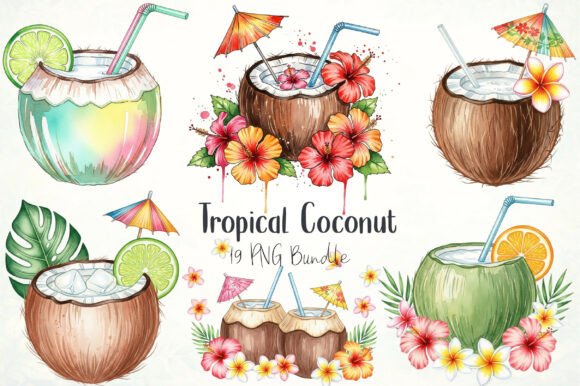
When I opened the Tropical Coconut Beach Cocktails Clipart set, I didn’t see another generic palm-frond silhouette or cartoon pineapple. What stood out was balance—playful but not childish, detailed but not fussy. The 19 designs lean into relaxed summer energy: coconuts with straws, tiki glasses with citrus wedges, hibiscus accents, and subtle wave motifs—all rendered in two distinct styles: clean solid color and a lightly distressed effect. As an embroidery designer who’s stitched everything from baby onesies to boutique aprons, I immediately asked: Where would this actually land well—not just look nice on screen?
A Real Project Test: Embroidering a Linen Tote for a Coastal Boutique
Last week, I prepped a custom order for a small coastal gift shop: six linen tote bags, each featuring a different tropical motif. I chose one of the solid-color cocktail designs (a coconut with a paper umbrella) sized to fit a 4″ × 4″ hoop. Why that one? Because it had clear negative space around key elements—no tight clusters of leaves or overlapping stems that’d vanish under dense fill stitch. The shape sat comfortably within standard hoop limits, and the outlines were bold enough to hold up on textured fabric without needing excessive underlay.
The distressed version? I held off. While charming digitally, that subtle grain doesn’t translate cleanly to thread—it blurs at stitch scale and risks looking muddy on medium-weight cotton or canvas. For embroidery, clarity trumps texture every time.
Where It Shines—and Where It Needs Caution
Strong fits:
- Sweatshirt embroidery — The solid-color versions pop beautifully on heather grey or navy fleece, especially at 3″–5″ width. No fine lines to disappear in looped pile.
- Embroidered patch — Clean edges and moderate detail make these ideal for sew-on or iron-on patches on denim jackets or camp backpacks.
- Baby embroidery — Soft color palettes (think mint, coral, sand) work well on organic cotton onesies—just avoid the most intricate variants near necklines or seams.
- Kitchen towel & apron design — These read clearly even after repeated washing, as long as stitch density is adjusted for absorbent cotton.
Use with care:
- Thin or stretchy fabric — Avoid placing any version directly over side seams or shoulder yokes without extra cutaway stabilizer.
- Dark fabric backgrounds — The distressed style loses definition unless you add a white underlay or switch to solid color + high-contrast thread (e.g., bright yellow on charcoal).
- Caps & curved surfaces — Stick to the simplest silhouettes (like a single tiki glass). Anything with internal detail—straws, citrus slices, layered leaves—will distort across the crown curve.
- Small hoop sizes (<3″) — Resize thoughtfully. Don’t force the full 12″ digital file down to 2″; instead, pick designs built for simplicity and scale them proportionally.
What This Means for Your Craft Business
If you’re an Etsy seller or small shop owner, Tropical Coconut Beach Cocktails Clipart isn’t just decoration—it’s a mood you can sell. Customers buying embroidered beach towels or vacation-themed baby blankets aren’t shopping for “tropical.” They’re shopping for *feeling*: ease, warmth, memory-making. These illustrations deliver that—but only if stitched with intention. A poorly stabilized tote bag with bleeding thread ruins the vibe faster than a rainstorm cancels a picnic.
I’ve seen too many crafters assume “PNG with transparent background” means “ready for machine embroidery.” It doesn’t. This is a digital illustration, not an embroidery file. You’ll need to digitize it—or hire someone who can—keeping stitch logic in mind: satin stitch for outlines, open fill for large areas, running stitch for delicate stems. That coconut shell? Great candidate for satin border + light fill. The paper umbrella? Best simplified to two clean shapes, not five overlapping layers.
Practical Designer Notes Before You Stitch
- Test on scrap fabric first—especially with your actual thread colors. A vibrant turquoise on screen may dull to seafoam under polyester thread.
- Review stitch density in your digitizing software. Too dense = puckering on lightweight cotton; too sparse = gaps on dark fabric.
- Confirm hoop size compatibility. The 12″ × 12″ PNG gives flexibility, but don’t assume all 19 designs scale evenly down to 3″ without losing legibility.
- Inspect small details closely: straws, citrus pith, leaf veins. If they’re under 0.8mm wide in the original, they’ll likely vanish in thread.
- Try black-and-white mockups. If the design flattens into a blob without color, it won’t hold up in monochrome embroidery either.
- Compare light vs. dark fabric previews. Some distressed edges gain charm on oatmeal linen but disappear on black twill.
- Use appropriate stabilizer—cutaway for knits, tear-away for stable wovens, mesh for lightweight items like tea towels.
- Verify licensing before selling finished products. Since this is categorized as Illustrations and Graphics, confirm whether commercial use covers physical goods, digital mockups, or resale of digitized files.
Final Thought: A Thoughtful Tool, Not a Magic Button
Tropical Coconut Beach Cocktails Clipart won’t replace your digitizing skills—but it does give you strong, cohesive source material for real embroidery projects. It’s the kind of asset that helps a handmade product feel intentional rather than assembled. Whether you’re stitching personalized gifts for a wedding weekend, building a seasonal collection for your Etsy shop, or designing staff aprons for a new tiki bar pop-up, these illustrations offer warmth, cohesion, and quiet professionalism. Just remember: great embroidery starts with smart choices—not just pretty pictures.