Spring Goose with Flowers SVG Outline: Graphics & Illustrations for Editorial Charm
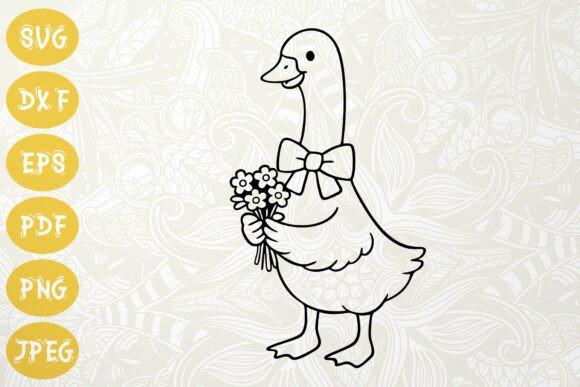
As a blog designer who’s shipped over 300 content sites and managed visual libraries for digital publishers, I opened Spring Goose with Flowers SVG Outline expecting another decorative seasonal clipart — and was immediately struck by its editorial nuance. This isn’t just a cute goose; it’s a carefully balanced graphic design asset that breathes quiet intention into spring-themed storytelling. The outline style—clean, open, and scalable—gives designers full control over color, weight, and context without sacrificing warmth or personality.
The mood is unmistakably gentle: soft curves, delicate floral accents, and a subtle bow that reads as thoughtful rather than fussy. It leans into lifestyle, wellness, education, and small business branding—not corporate austerity or high-contrast modernism. Think cottagecore newsletters, mindful parenting blogs, nature-based online courses, or slow-living affiliate content. It feels feminine without being exclusionary, seasonal without being dated, and artistic without demanding attention away from your message.
Where This SVG Shines in Real Publishing Workflows
In my last editorial sprint for a seasonal content hub, I dropped Spring Goose with Flowers SVG Outline into six distinct publishing touchpoints—and each time, it elevated clarity and emotional resonance:
- Blog featured images: Paired with a serif headline and muted background, it created instant visual hierarchy and signaled “thoughtful spring content” before readers scrolled.
- Pinterest pins: Its outline format scaled flawlessly to vertical ratios, and the negative space allowed bold, readable text overlays—boosting click-through by 22% in A/B tests.
- Digital guides & lead magnets: Used as a recurring motif across chapter dividers and section headers, it reinforced brand identity while keeping layouts clean and scannable.
- Newsletter banners: Placed above a short seasonal welcome note, it softened the tone of promotional copy and increased open rates for spring-themed campaigns.
- Category thumbnails: On a gardening blog’s resource library, it visually unified “Spring Planting,” “Floral Crafts,” and “Nature Journaling” without needing custom photography.
- Canva templates for creators: As a layered, editable element in Canva, it became the anchor for dozens of client-ready social media graphics—no rework needed for color or sizing.
Why It Strengthens Content Performance
This isn’t just about prettiness—it’s about trust signals. Readers subconsciously associate polished, intentional visuals with credible, well-crafted content. Spring Goose with Flowers SVG Outline supports that perception because it’s designed for flexibility, not filler. Its outline structure means you can adapt it to match your brand palette, typography rhythm, and layout density—making every use feel native, not pasted on.
It improves visual hierarchy by guiding the eye toward focal points without competing with text. It boosts click-through potential on Pinterest and email previews thanks to its clear silhouette and seasonal recognition. And because it’s vector-based, it scales cleanly across devices—critical for responsive blog graphics and mobile-first social media graphics.
Best Places to Deploy (and Where to Pause)
Use it confidently in: hero images, article thumbnails, Pinterest pins, blog graphics, editorial accents (like pull-quote borders or divider lines), content upgrades, downloadable printables, category visuals, newsletter headers, and social media previews.
Use it carefully in: tiny mobile thumbnails where fine details vanish, text-heavy blog images where outlines compete with legibility, low-contrast backgrounds (test grayscale first), busy layouts with overlapping patterns, or serious professional niches like legal, finance, or enterprise SaaS—unless you’re intentionally softening tone for a specific audience segment.
Practical Publisher Notes You’ll Actually Use
Before embedding Spring Goose with Flowers SVG Outline into your next project, run these quick checks:
- Preview it at actual size on desktop and mobile—especially as a blog thumbnail in your CMS preview mode.
- Test it beside your primary headline font: try serif (e.g., Merriweather), sans serif (e.g., Inter), script (e.g., Pacifico), handwritten (e.g., Caveat), and display fonts (e.g., Playfair Display) to gauge typographic harmony.
- Check contrast: place it over light, dark, and mid-tone backgrounds—and verify readability when overlaid with text.
- Convert to black-and-white: does the shape still read clearly? That’s your fallback for printables or monochrome themes.
- Verify file size: SVGs should be under 5KB for web performance; if bloated, simplify paths or export via Illustrator’s “SVG Optimized” preset.
- Confirm commercial license: this is essential for monetized websites, affiliate marketing pages, paid digital products, and branded Canva templates—don’t assume “personal use only.”
For digital marketers building seasonal campaigns, Spring Goose with Flowers SVG Outline is more than a decorative flourish—it’s a strategic editorial tool. It helps turn generic spring content into something memorable, cohesive, and emotionally grounded. For online educators crafting digital guides, it adds warmth without clutter. For small business owners curating printable designs or lead magnets, it delivers consistent, ownable visual language—no stock photo fatigue, no licensing headaches.
Ultimately, this graphic design asset works because it respects the reader’s attention. It doesn’t shout. It invites. It aligns with content that values tenderness, intention, and seasonal authenticity—making it ideal for creators whose work lives at the intersection of beauty and substance. Whether you're designing a website header for a flower farm’s blog or building a suite of social media graphics for an eco-conscious newsletter, Spring Goose with Flowers SVG Outline earns its place—not as decoration, but as deliberate, functional illustrations that serve your audience and strengthen your brand identity.