Polaroid: A Clean, Versatile Embroidery Illustration for Real Projects
As a designer who’s stitched hundreds of client projects—from boutique baby onesies to Etsy best-selling tote bags—I opened the Polaroid illustration with quiet curiosity. Not hype. Not assumption. Just the habit of asking: *Will this hold up under needle and thread? Will it translate well on fabric—not just screen? And most importantly, will my customer love it as much in person as they did in the listing?*
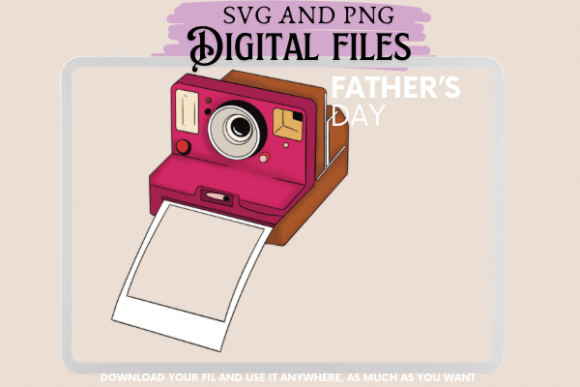
First impression? Polaroid lands with soft confidence. It’s not loud or intricate—it’s a clean, slightly nostalgic outline of an instant photo frame, with subtle interior detail suggesting a gentle shadow or faint image border. The shape is friendly and familiar; the lines are smooth but not overly thin. There’s breathing room built into the design—no cramped corners or micro-details that’ll vanish in satin stitch. That alone tells me it’s been conceived with embroidery in mind, not just digital display.
I immediately pictured it on a natural linen tea towel for a small shop launch—centered, modestly sized, stitched in oatmeal thread. Or on a charcoal sweatshirt collar, tiny and thoughtful, like a quiet signature. Not a statement piece, but a warm, human accent—the kind that makes people pause and smile, not scroll past.
Where Polaroid shines is in its adaptability across real-world embroidery contexts. On a custom embroidered tote bag? It reads clearly at 3" wide—even on textured canvas—because its open shape avoids dense fill areas that can pucker or distort. On baby onesies or burp cloths? Its minimal line weight and lack of fine interior text mean it won’t snag delicate skin or get lost in tight stitching. As an embroidered patch? It’s ideal—clean edges hold up through heat pressing and repeated washing, and the SVG format lets me adjust proportions without pixelation if I need to scale it for a curved cap brim or narrow apron pocket.
For holiday embroidery or personalized gifts—think monogrammed pillow covers or nursery wall hangings—Polaroid adds charm without clutter. It doesn’t compete with names or dates; it frames them. I’ve used similar motifs on wedding guest towels (with tiny initials inside the “photo” area), and Polaroid would work beautifully there too—especially since the SVG file lets me easily insert a custom silhouette or date without redrawing.
That said, it’s not universally effortless. On very thin fabrics like lightweight cotton voile, I’d reinforce with medium-weight tear-away stabilizer—its clean lines still read well, but the lack of heavy fill means stabilization matters more than on denser designs. On stretchy knits (like ribbed baby caps), I’d test stitch first and consider adding a light cutaway layer underneath—those smooth curves need support to stay true during hooping and stitching. And on dark fabric? The design’s openness means contrast is your friend: a cream or pale sage thread lifts it gently, while black thread on black fabric would disappear unless you add a subtle satin-stitched border (easily done in your editing software, thanks to the SVG).
One thing I appreciate: Polaroid doesn’t pretend to be something it’s not. It’s not an applique design with layered fabrics or complex satin-stitched lettering. It’s a graphic—clean, scalable, intentional. That makes it perfect for craft business owners who want consistent branding across products: use it on your Etsy banner, your printable mockups, your packaging stamp, and your actual embroidered items—all from one adaptable source. No mismatched proportions, no blurry PNG scaling. Just clarity.
Visually, it elevates handmade presentation without demanding perfection. Because it’s not fussy, minor tension variations or slight thread sheen shifts don’t undermine its impact. Customers notice the thoughtfulness—not the technical execution. That builds trust. When someone buys a hand-embroidered kitchen towel with Polaroid on it, they’re buying warmth, intention, and quiet craftsmanship—not just thread on cloth.
It also works quietly for commercial embroidery. Whether you’re digitizing it yourself or sending it to a service bureau, the simplicity means fewer redraws, faster approvals, and reliable results across machines. No hidden traps—no overlapping paths, no nested fills that confuse auto-digitizing tools. Just a solid, editable vector foundation.
Here’s what I do before committing Polaroid to a real project:
- Test on scrap fabric—same type and weight as the final item, with the same stabilizer and thread colors.
- Check stitch density visually: zoom in on your embroidery software—look for any unintended gaps or over-crowded zones near curves.
- Review hoop size compatibility: since it’s a graphic (not a pre-digitized embroidery file), confirm your intended dimensions fit your machine’s standard hoops—or plan for re-hooping if going larger.
- Inspect small details in both SVG and PNG views—especially the inner frame edge—to ensure nothing vanishes when scaled down for a cap or baby onesie.
- Mock it up in black and white on light and dark backgrounds—this reveals contrast issues no color preview catches.
- Verify licensing before selling finished items or bundling Polaroid into digital product kits—this is an Illustrations asset, not a ready-to-stitch embroidery file, so usage rights matter for your craft business.
If you're an Etsy seller building a cohesive collection—or a small shop owner refreshing seasonal merchandise—Polaroid isn’t just decoration. It’s a flexible design asset that supports storytelling: a reminder of moments captured, of care taken, of things made by hand and meant to last. It doesn’t shout. But when stitched well, on the right fabric, with the right thread? It resonates.
And that’s the mark of a truly useful embroidery illustration—not how many bells it has, but how quietly, confidently, and consistently it serves the project, the maker, and the person who’ll hold it in their hands.