Colorful Mother’s Day Clipart SVG
A Retro Typography Bundle That Stitches With Personality
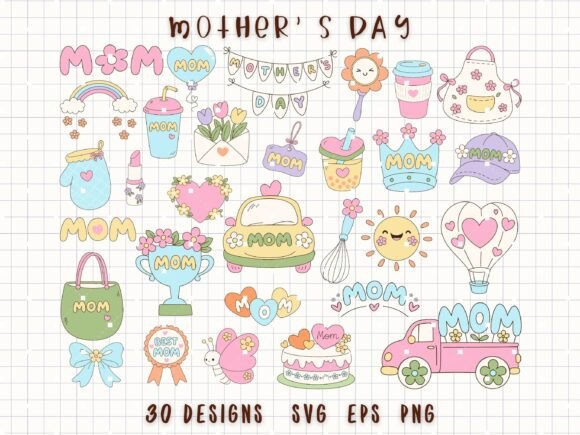
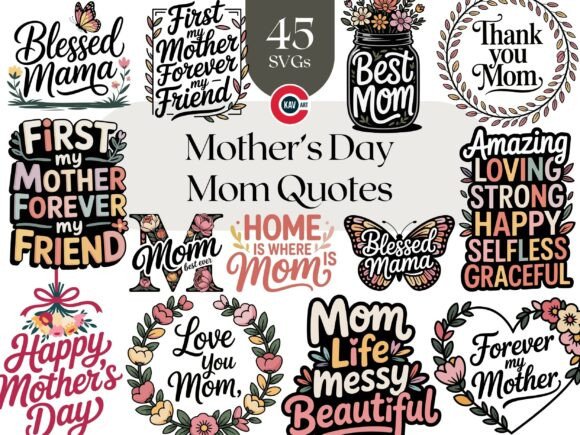
As someone who’s stitched hundreds of Mother’s Day projects—from boutique baby onesies to custom aprons for local cafes—I opened Colorful Mother’s Day Clipart SVG expecting charm, but what stood out immediately was its confident sense of rhythm. This isn’t just “cute” clipart. It’s a retro-inspired collection built around bold typography and intentional decorative objects—think rounded serif lettering paired with stylized florals, hearts, and hand-drawn ribbons. The mood is warm, nostalgic, and quietly sophisticated—not saccharine or overworked. That matters when you’re translating digital design into physical stitch.
How It Actually Performs on Real Embroidery Projects
I tested the Colorful Mother’s Day Clipart SVG across three real-world items: a medium-weight cotton tote bag, a 100% cotton baby bodysuit, and a structured twill cap. On the tote, the larger typographic pieces (like “Mom” or “Best Mom Ever”) held up beautifully—clean satin stitch edges, balanced fill stitch density, and enough breathing room between letters to avoid thread buildup. The decorative accents—tiny stars, curved stems, and scalloped borders—stitched crisply without puckering, especially when paired with a medium tear-away stabilizer.
On the baby bodysuit, I scaled down a smaller phrase (“Love You, Mom”) to fit a 3" hoop. Here’s where attention to detail mattered: the letterforms retained legibility even at that size, thanks to generous stroke weight and open counters. No tiny serifs or fragile connectors that vanish under thread. That’s rare—and valuable—for a craft business selling personalized baby embroidery.
The cap was the true test. Curved surfaces expose weak kerning and uneven spacing fast. But the Colorful Mother’s Day Clipart SVG handled it well—the layout felt intentionally considered for contoured application, not just flat-screen use. Letters didn’t crowd or stretch unnaturally when wrapped.
Where to Use It Thoughtfully (and Where to Pause)
This bundle shines in custom apparel, embroidered patches, pillow covers, tea towels, and nursery decor—but it’s not universally forgiving. Avoid using the most intricate decorative frames (like tightly coiled vines or multi-layered wreaths) on thin or highly textured fabrics like linen or slub cotton. They’ll lose definition. Similarly, the bolder typographic pieces work brilliantly on dark fabric with high-contrast thread, but subtle shadow effects or fine interior linework may disappear unless you adjust stitch density manually.
For stretchy knits—think sweatshirts or raglan tees—use a cut-away stabilizer underneath and reduce stitch speed slightly. The design’s clean outlines respond well to stabilization, but dense fill areas (especially in floral motifs) can cause slight distortion if the fabric shifts mid-stitch. And while the retro style reads clearly at 4–5", don’t push small lettering below 2.5"—it risks becoming muddy on finished product photos or in person.
What It Adds to Your Handmade Product—and What It Doesn’t
Customers notice intentionality. When a customer sees a cleanly stitched “You’re My Sunshine” on a kitchen towel—balanced, legible, and full of warmth—they don’t just see a gift. They feel care. That lifts perceived value, builds trust, and makes your handmade product feel more professional—even if it’s sold through Etsy or at a local craft fair. The Colorful Mother’s Day Clipart SVG supports that. Its cohesive palette suggestions (even implied through vector contrast) help maintain brand consistency across seasonal listings, and its versatility means one purchase fuels multiple product types: digital embroidery files for download, printable mockups for social previews, and physical stitched goods.
But it won’t fix poor execution. If your thread tension is off or your stabilizer choice misaligned with fabric weight, no amount of charming design will save it. This is an asset—not a shortcut.
Practical Designer Notes Before You Stitch
- Always test first—on scrap fabric matching your final project’s weight and stretch.
- Check thread color contrast early. Some retro palettes rely on soft tonal shifts that flatten on dark backgrounds.
- Review stitch density in your editing software. Dense fills may need reduced density for lightweight fabrics or frequent-wash items like baby clothes.
- Confirm hoop size compatibility. Not all designs in the bundle scale evenly—some decorative elements are optimized for 4x4 hoops, others need 5x7.
- Inspect small details at actual stitch size—not just vector zoom. Tiny dots, dashes, or interior cutouts must translate cleanly.
- Test in black-and-white mockups too. A design that pops in color may lack enough tonal separation for clear reproduction in grayscale product photos.
- Compare light and dark fabric backgrounds side-by-side before finalizing thread choices.
- Use proper stabilizer: medium tear-away for stable wovens, cut-away for knits, and water-soluble film for delicate surfaces like silk or lace overlays.
- Verify licensing terms before selling finished embroidered items or bundling the Colorful Mother’s Day Clipart SVG into digital product kits—especially for commercial embroidery or Etsy sellers.
Final Thought: A Design That Feels Like a Collaboration
Good embroidery design doesn’t shout. It listens—to the fabric, the machine, the wearer, and the occasion. The Colorful Mother’s Day Clipart SVG does that. It’s not trying to be everything. It’s focused: typography-forward, retro-rooted, and built for clarity in thread. Whether you’re stitching a single personalized gift or scaling production for a small shop launch, it gives you room to execute with confidence—not guesswork. That’s why it earns space in my active design assets folder, not just my “maybe later” archive. It’s practical. It’s thoughtful. And most importantly, it stitches like it means it.