Adorable Teddy Bear Vector Bundle
First Impressions: Soft, Sweet, and Stitch-Ready
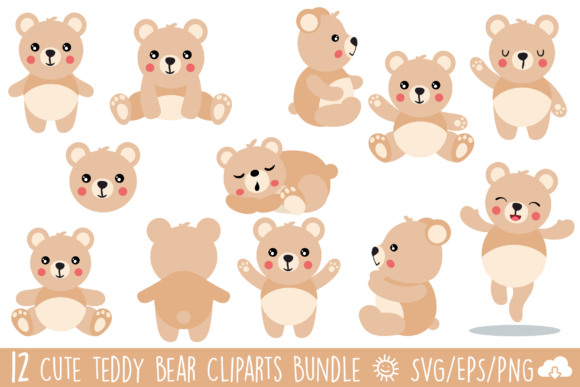
Opening the Adorable Teddy Bear Vector Bundle, I immediately felt that familiar warmth—the kind you get when a design lands just right for handmade charm. These aren’t cartoonish or overly stylized bears; they’re gentle, expressive, and intentionally simple in silhouette. Twelve poses—sitting, waving, hugging knees, peeking sideways—each with soft contours, rounded limbs, and subtle facial cues. No sharp angles, no aggressive detailing. That’s not a limitation—it’s thoughtful design discipline. As an embroidery designer who’s stitched hundreds of animal motifs, I know this simplicity is gold: it translates cleanly into satin stitch curves, holds up at 3–4 inches wide on a tote bag, and reads instantly on a baby onesie.
A Real Project Test: Embroidering a Nursery-Themed Kitchen Towel
Last week, I prepped a custom order for a boutique client: embroidered linen tea towels for a baby shower gift set. I chose one of the sitting teddy bears from the Adorable Teddy Bear Vector Bundle—not the most detailed pose, but the one with clear negative space around the head and paws. Why? Because linen breathes, frays easily, and doesn’t love dense fill stitches. This bear had clean outlines and open areas that let the fabric show through—ideal for a light, breathable, heirloom-adjacent finish. After digitizing (yes, vectors need careful conversion for machine embroidery), the stitch-out was clean: smooth satin borders, balanced fill density, no thread nesting in the ears. Customers don’t see the vector file—they see the finished product. And what they saw was warmth, intention, and quiet craftsmanship.
Where It Shines—and Where to Pause
The Adorable Teddy Bear Vector Bundle excels in projects where emotional resonance matters more than technical flash: personalized baby blankets, embroidered patches for children’s backpacks, sweatshirt front designs for small-batch apparel brands, and nursery wall art prints paired with physical embroidery samples. Its strength isn’t photorealism—it’s approachability. That makes it perfect for Etsy sellers offering “custom embroidered onesies” or craft fair vendors selling hand-stitched pillow covers.
But here’s where judgment matters: avoid using the most intricate bear (the one holding a tiny heart) on a curved cap front without adjusting stitch angles and underlay. Don’t push the smallest bear into a 2-inch hoop on stretchy jersey—it’ll distort unless stabilized heavily. And while the vectors are clean, remember: *vector ≠ embroidery file*. You’ll still need to digitize thoughtfully—especially for applique design workflows or layered satin-stitch eyes. On dark fabrics, test thread colors early; a pale beige bear may vanish without contrast stitching or background fill.
Design Integrity Meets Commercial Reality
As someone who reviews embroidery assets for small creative businesses, I pay close attention to how a design affects perceived value—not just aesthetics. The Adorable Teddy Bear Vector Bundle elevates handmade products because it feels intentional, not clipart-y. When stitched on a cotton apron for a local bakery’s staff gift, it read as bespoke—not generic. That builds trust. Buyers notice when a bear’s expression stays friendly after five washes (hint: keep stitch density moderate and avoid overfilling cheeks). It also supports brand consistency: if your shop leans into cozy, nostalgic, or minimalist nursery themes, this bundle reinforces that voice across digital mockups, social posts, and physical goods.
For digital product sellers, these vectors work beautifully as base assets for printable mockups—just add subtle shadow layers and fabric texture overlays. For craft business owners bundling physical + digital items, pairing one bear design with a matching embroidery file (digitized separately) creates real upsell potential. But—and this is critical—verify licensing before selling finished embroidered items or reselling digitized versions. The product description says “high-quality vector set,” not “commercial-use embroidery file.” Always confirm permissions.
Practical Designer Notes You’ll Actually Use
- Test first on scrap fabric—especially if using textured weaves like terry cloth or bouclé. What looks smooth on screen can snag threads mid-stitch.
- Check thread color contrast before stitching on light or dark backgrounds. A warm tan bear pops on navy but disappears on oatmeal—swap to cream or charcoal for clarity.
- Review stitch density in high-detail zones (like paw pads or ear interiors). Overly dense fills cause puckering on lightweight baby knits.
- Confirm hoop size compatibility. If your standard hoop is 4×4”, choose bears that fit comfortably within that frame—including margin for stabilizer pull.
- Inspect small details at actual stitch-out scale. Tiny noses or bow loops may vanish below 0.15” height—simplify or omit them for apparel.
- Mock up in black and white to assess readability. If shapes blur together without color, simplify the vector before digitizing.
- Use appropriate stabilizer: cutaway for knits, tear-away for stable wovens, and fusible for lightweight linens.
- Verify dual-use rights—personal stitching is rarely restricted, but commercial embroidery, resale of finished goods, or bundling as digital embroidery files often requires explicit license terms.
Final Thought: Charm That Stitches True
The Adorable Teddy Bear Vector Bundle isn’t about trend-chasing. It’s about reliability—the kind that lets you say “yes” to a last-minute embroidered pillow cover order, or confidently list a new baby embroidery kit on Etsy. It fits quietly into the workflow of craft business owners, apparel decorators, and hobbyists who care how their work feels in someone’s hands. It’s not flashy. It doesn’t try to be everything. But when stitched well, on the right fabric, with thoughtful color and stabilizer choices—it delivers exactly what its name promises: adorable, sincere, and ready for real life.